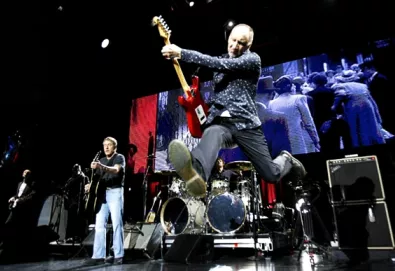

The Who formed in London in 1964 out of the band The Detours (briefly going by the name The High Numbers). Its classic lineup consisted of Roger Daltrey (vocals), Pete Townshend (guitar and lead songwriter), John Entwistle (bass), and Keith Moon (drums). Associated with British mod culture, the band combined influences from rhythm and blues, rock and roll, and American soul with an aggressive sound and explosive performances, famous for smashing instruments on stage.
Their debut album was My Generation (1965), whose title track became an anthem of youthful rebellion. Townshend’s creative restlessness soon led the group to innovations such as A Quick One (1966) and The Who Sell Out (1967), expanding the concept album format.
With the album Tommy (1969), The Who popularized the rock opera format on a double album marked by classics such as “Pinball Wizard.” In the 1970s, the band broadened its horizons with the live album Live at Leeds (1970), the masterpiece Who’s Next (1971)—which features “Baba O’Riley,” “Behind Blue Eyes,” and “Won’t Get Fooled Again”—and Quadrophenia (1973), which delved into the conflicts of the mod youth movement.
On The Who by Numbers (1975), their seventh studio album, the group opted for a more conventional, straightforward, and deeply introspective format. Who Are You (1978) marked the last studio album with the classic lineup, which came to a tragic end with the death of Keith Moon that same year.
In the 1980s, the band released Face Dances (1981) and It’s Hard (1982).
The Who profoundly influenced hard rock, punk, and power pop, in addition to transforming the album into a cohesive narrative space, and was inducted into the Rock & Roll Hall of Fame in 1990.
In 2002, bassist John Entwistle passed away at the age of 57. The Who continued to perform and released albums such as Endless Wire (2006) and WHO (2019).
- Origin: