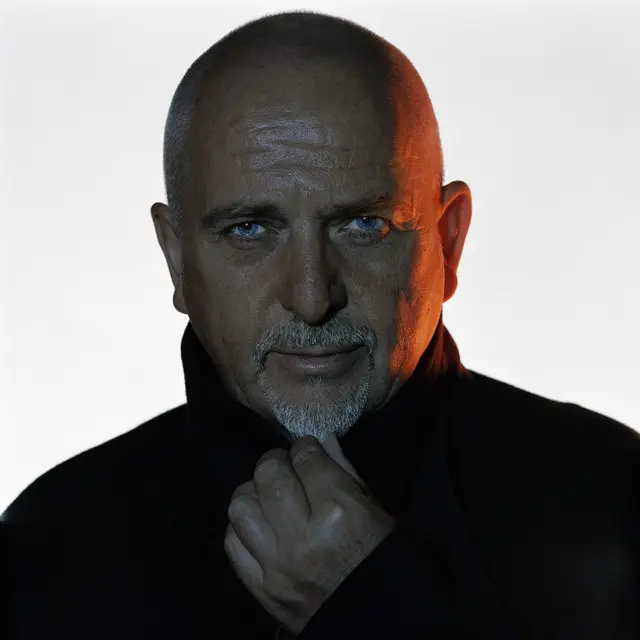
Born on February 13, 1950, in Chobham, Surrey (England), Peter Gabriel was exposed to music at an early age, encouraged by his mother, who taught him to play the piano. In 1967, while still a student, he helped found Genesis, a band that would become one of the world’s leading progressive rock acts. As a lead singer, he stood out for his dramatic performances, expressive vocals, and theatrical stage shows marked by eccentric costumes and characters. He contributed to the band’s seminal albums, such as Foxtrot (1972), Selling England by the Pound (1973), and the rock opera The Lamb Lies Down on Broadway (1974), before leaving the group in 1975 to pursue a solo project.
His solo career began in 1977 with his self-titled debut album (known as Car), which featured the classic “Solsbury Hill.” In his subsequent works, Gabriel delved deeper into electronic music, sonic experimentation, and rhythms from different cultures. Global commercial recognition came with So (1986), a landmark album that brought together timeless hits such as “Sledgehammer,” “In Your Eyes,” and the moving duet “Don’t Give Up” with Kate Bush. The project also revolutionized the industry with innovative music videos, especially the award-winning “Sledgehammer” video, famous for its pioneering animation techniques.
His musical background spans soul, blues, and R&B—with Otis Redding cited as his favorite singer—as well as Beatles, psychedelia, and classical music. Later, Gabriel deepened his interest in African and Asian musical traditions, collaborating with major artists such as Youssou N’Dour and Nusrat Fateh Ali Khan. This fusion gained widespread recognition in Passion (1989), the soundtrack composed for Martin Scorsese’s film The Last Temptation of Christ.
In addition to being a composer and performer, Gabriel expanded his cultural impact by helping to create the WOMAD (World of Music, Arts and Dance) festival and by founding the Real World Records label, thereby broadening the international reach of artists from diverse backgrounds. His work also carries a strong political and humanitarian dimension, expressed in protest songs such as “Biko” (against apartheid) and in his ongoing support for Amnesty International. Remaining artistically active over the decades, he released O\I, his eleventh solo album, in 2026.
- Origin: